Key takeaways
- High prices relative to rents mean many California deals land near or below a 1.0 DSCR — larger down payments and low-ratio programs are common.
- Prop 13 resets your assessed value to the purchase price, so your taxes are predictable but won't match the seller's.
- AB 1482 caps annual rent increases on many properties; some single-family homes are exempt, depending on how they're owned.
- Wildfire-zone insurance can be the single biggest threat to a California ratio — quote it before you remove contingencies.
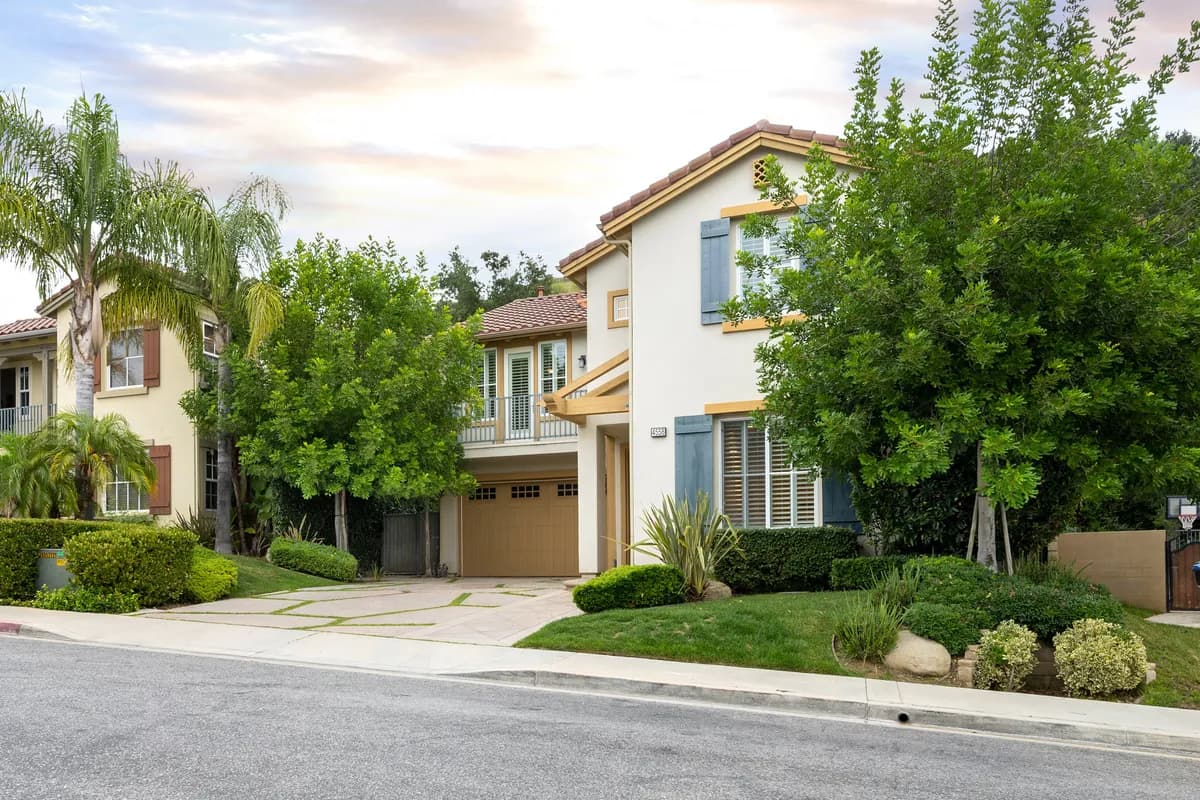
California is where DSCR investors go for appreciation and where the ratio is hardest to hit. A house that would post a 1.4 in Ohio posts a 0.9 in Orange County. That doesn't make the state unfinanceable — it changes which levers you pull. The investment property program covers California the same as every other state; the inputs are what's different.
How DSCR loans work in California
The lender divides the property's gross monthly rent by its full payment — principal, interest, taxes, insurance, and HOA — and qualifies the loan on that ratio, not on your personal income. No tax returns or employment verification. The general rules are in DSCR loan requirements. What follows is specific to California.
Property taxes: Prop 13 cuts both ways
Under Proposition 13, a property is reassessed at its purchase price when it sells, and the assessed value can then rise no more than 2% a year. The base rate is 1%, and local bonds and assessments typically bring the effective rate to around 1.1% to 1.25%. Newer subdivisions may add Mello-Roos special taxes on top. The seller's bill, based on a purchase years ago, tells you nothing. Underwrite at your price, and check the tax bill for Mello-Roos before you offer.
Insurance: the wildfire problem
Several major carriers have limited new policies in California, and properties in high fire-risk areas often end up on the FAIR Plan with a supplemental policy — at several times the cost of a standard policy. Because insurance is part of the DSCR payment, a $400-a-month premium can sink a deal that looked fine on paper. Get a bindable quote inside your contingency period, every time.
Rent control and landlord law
- AB 1482 caps annual rent increases at 5% plus local inflation, to a maximum of 10%, and requires just cause to end most tenancies after 12 months.
- Exemptions include most housing built within the last 15 years and single-family homes and condos owned by individuals — not corporations, REITs, or LLCs with a corporate member — provided the required notice is in the lease. How you take title can determine whether the cap applies.
- Cities including Los Angeles, San Francisco, Oakland, and Santa Monica have their own, stricter ordinances.
- Security deposits are generally capped at one month's rent, with a limited exception for small landlords.
- Eviction timelines in California are among the longest in the country; underwrite a vacancy reserve accordingly.
The entity question matters here more than anywhere: closing in an LLC is standard for DSCR loans, but in California it can change your rent-control status. Read DSCR loans for LLCs, then talk to a California real estate attorney. I'm a lender, not a legal advisor.
Short-term rentals
California STR rules are local and frequently restrictive. Los Angeles limits home-sharing to a host's primary residence. San Diego issues a capped number of whole-home licenses. Desert and coastal cities set their own permit caps and neighborhood limits. If your DSCR depends on short-term income, confirm the permit is obtainable for that specific address before you rely on it — see financing an Airbnb.
Where the ratio works
- Central Valley — Fresno, Bakersfield, Stockton: the most favorable rent-to-price ratios in the state.
- Inland Empire and Sacramento: mid-priced, strong tenant demand, ratios near 1.0 with 25% down.
- Coastal Los Angeles, Orange County, San Diego, and the Bay Area: appreciation markets where ratios often fall below 1.0 without a larger down payment.
- Properties with an ADU: a permitted second unit adds rent without a second purchase price, and California law has made ADUs easier to build. See ADU financing.
Closing costs
California is an escrow state — independent escrow and title companies handle the closing. The county documentary transfer tax is $1.10 per $1,000, and several cities add their own, in some cases substantial on high-value sales. Who pays is customary by county. DSCR loans usually carry a prepayment penalty, so match the term to your hold period.
A worked California example
A $380,000 single-family rental in Fresno rents for $2,400. With 25% down, the loan is $285,000. At an illustrative 7.5% rate — an example, not a quote — principal and interest is about $1,993. Taxes at 1.2% add $380 a month and insurance adds $150, for a payment of $2,523 and a DSCR of 0.95. Increase the down payment to 30% and the loan drops to $266,000, the payment to about $2,390, and the ratio reaches 1.00. That five-point swing is the California conversation in miniature. Test your own numbers in the DSCR calculator.
What if the ratio is below 1.0?
Low-ratio and no-ratio DSCR programs exist for exactly this market, at a higher rate and typically a larger down payment. An interest-only structure also lowers the payment used in the calculation with many lenders. The trade-offs are in what is a good DSCR ratio.
DSCR loans in other states
- DSCR loans in Texas
- DSCR loans in Florida
- DSCR loans in Michigan
- DSCR loans in Virginia
- DSCR loans in Ohio
Send me the address, the expected rent, and an insurance quote, and I'll tell you where the ratio lands and which program fits. I'm licensed in all 50 states, California included. Guidelines vary by lender and change over time.
Have a situation like this?
Every file is different. Book a free consultation and get answers specific to you — no obligation, no pressure.
Book a Free Consultation