Key takeaways
- Investment construction loans fund the build in stages (draws), with interest accruing only on what's been drawn.
- Lenders underwrite the project — budget, builder, and the finished property's value and rent — not just the borrower.
- The exit matters as much as the build: a construction-to-perm structure or a DSCR takeout loan retires the construction note.
- New construction can out-return buying existing stock: you manufacture the equity instead of paying retail for it.
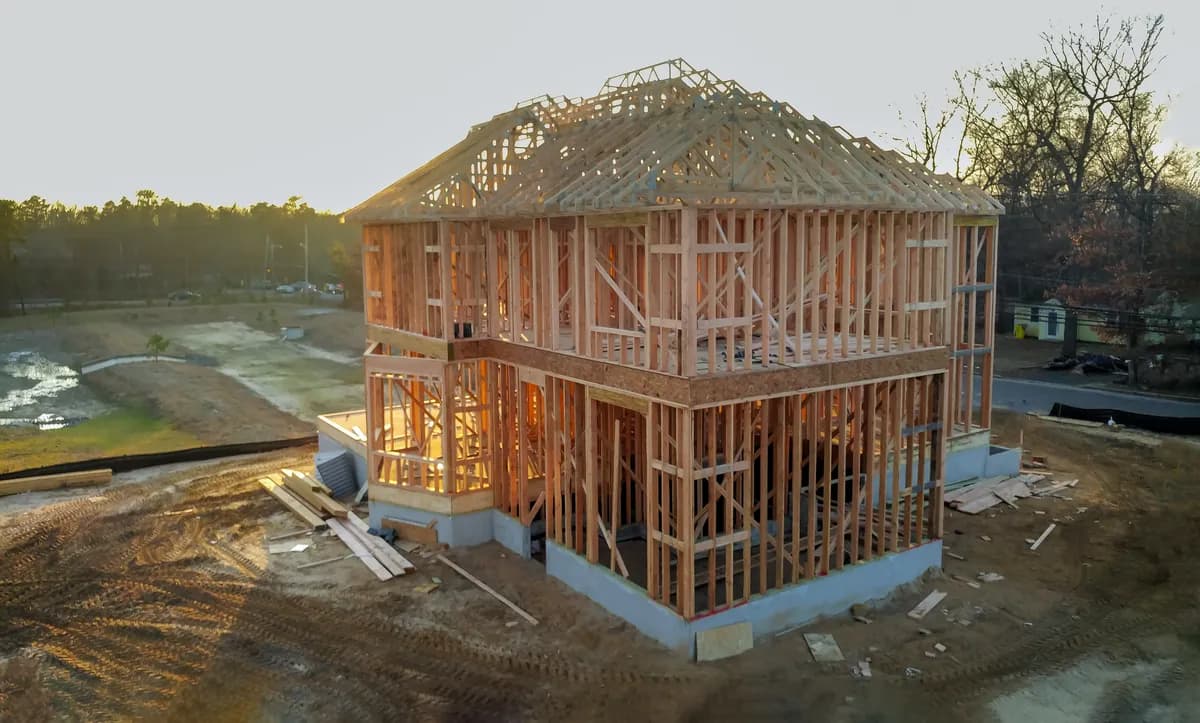
Sometimes the numbers on existing inventory just don't pencil — prices are retail, the good stock gets bid up, and every listing needs a renovation priced like it doesn't. That's when experienced investors start looking at dirt. Building a rental from the ground up lets you manufacture your equity instead of buying it: when the certificate of occupancy lands, the spread between all-in cost and finished value is yours. The financing that makes it possible is the construction loan — and it works differently than any mortgage you've had.
How the money actually flows
A construction loan doesn't arrive as a lump sum. The lender approves a total budget, then releases it in draws tied to milestones — foundation, framing, mechanicals, finishes — with an inspection before each release. You pay interest only on what's been drawn, so carrying costs start small and grow with the building. The loan itself is short-term, typically twelve to twenty-four months, designed to die at completion when permanent financing takes over.
What the lender is really underwriting
- The budget — a complete, realistic cost breakdown with contingency; optimistic budgets are the #1 cause of stalled projects.
- The builder — licensed, insured, with a track record; owner-builders face a higher bar.
- The finished numbers — appraisal of the completed property and, for rentals, the market rent it will command.
- Your capacity — down payment on the lot and build (often 20–30% of total cost), plus reserves for the surprises construction always serves.
The exit: construction-to-perm vs. the DSCR takeout
Every construction loan needs a retirement plan. A construction-to-perm structure converts automatically into a mortgage at completion — one closing, one set of costs. The alternative is a standalone takeout: finish the build, lease it up, then refinance into a DSCR loan that qualifies on the property's brand-new rental income rather than your tax returns. For investors, the DSCR takeout is often the cleaner play — the finished, leased property carries its own approval, and your personal borrowing power stays free for the next project.
Why this pencils when buying doesn't
Build-to-rent flips the value equation. Instead of paying market price for someone else's finished product, you pay cost — land, sticks, and labor — and pocket the developer's margin yourself. New construction also rents at the top of the market, maintenance starts at zero, and the property appraises fresh. The trade is time and complexity: eighteen months of decisions instead of a thirty-day close. The financing shouldn't be one of the complexities — bring me the lot, the budget, and the builder, and I'll structure the build and the exit as one plan.
Have a situation like this?
Every file is different. Book a free consultation and get answers specific to you — no obligation, no pressure.
Book a Free Consultation